Key takeaways
- Short rows add partial rows of knitting to one section of your fabric, which shapes sock heels, shoulders, bust darts, and sloped necklines without adding stitches.
- Wrap-and-turn is the classic method and works everywhere, but it leaves a visible wrap you have to pick up later.
- German short rows are the fastest to work because you create a double stitch simply by pulling the working yarn firmly over the needle.
- Japanese short rows use a removable marker on the loop and usually give the tidiest, least bulky turning point.
- Match the method to the project: German for speed, Japanese for precision, shadow wraps for garter and colorwork, wrap-and-turn when a pattern calls for it.
To knit short rows, you stop partway across a row, turn your work, and knit back, then close the small gap left at each turning point so no hole shows. That single idea, repeated across a section, is how knitters shape sock heels, shoulders, and curved hems without adding or removing a single stitch.
The four methods below close the turning gap in different ways: wrap-and-turn, German, shadow wraps, and Japanese. The fabric result is almost identical, so the right choice usually comes down to how the turn looks, how fast it works, and whether your pattern already assumes one approach. German short rows are the fastest for most knitters, and that is the method to try first.
What Short Rows Do and Where You Use Them
A short row is a row that is not knitted all the way to the end. You turn before reaching the edge, which builds up extra height in one part of the fabric while the rest stays shorter. Short rows introduce extra rows, called courses, while increases introduce extra columns, called wales, a distinction documented in the Wikipedia entry on short rows. That difference matters: short rows change shape without changing your stitch count.
This makes them one of the most useful shaping tools in knitting. Common uses include:
- Sock heels, both the classic flap-and-gusset turn and the smooth short-row heel
- Shoulder slopes, so the back of a sweater sits higher than the front
- Bust darts, which add length over the chest for a better fit
- Sloped necklines and curved hems
- Toe-up sock heels and sideways-knit shawls
Because the stitch count stays the same, short rows slot neatly into charts and grading math, which makes them a natural fit when you design your own patterns and need to shape without juggling increases. The Craft Yarn Council lists short rows among its experienced-level techniques, alongside cables and lace, so expect a short learning curve, then quick payoff once the turn clicks.
Wrap-and-Turn, Step by Step
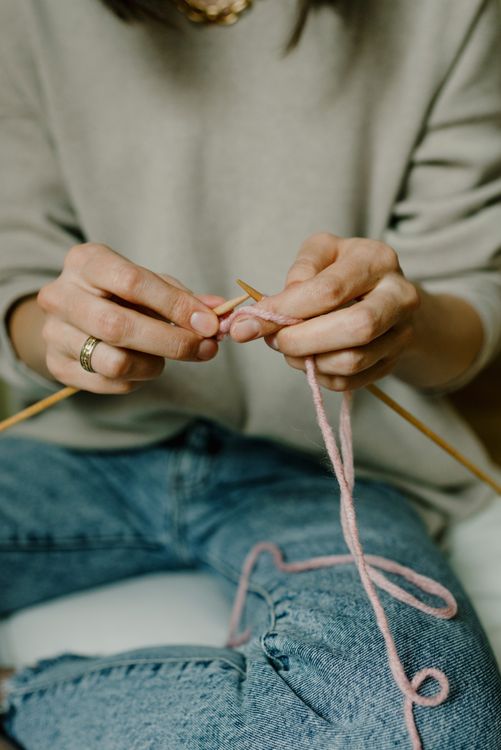
Wrap-and-turn, often written as W&T, is the method most patterns default to. You wrap the working yarn around the next stitch before turning, which anchors the turning point and prevents a hole. Here is the full sequence on a knit row.
- Work across to the turning point named in your pattern.
- Bring the yarn to the front of the work, between the needles.
- Slip the next stitch purlwise onto the right needle.
- Bring the yarn to the back.
- Slip that stitch back to the left needle. The working yarn now wraps the base of that stitch.
- Turn your work and continue in the other direction.
On the following pass, when you reach a wrapped stitch, you pick up the wrap and knit or purl it together with the stitch it hugs. That step hides the wrap and closes the gap. Purl-side wraps work the same way with the yarn moving in the opposite direction.
The strength of wrap-and-turn is that it works in any yarn and any stitch pattern, and nearly every tutorial and pattern assumes you know it. The weakness is the pickup: in slippery or dark yarn the wrap can be hard to see, and a sloppy pickup leaves a visible bump. Take your time snugging each wrap and the finish is clean.
German Short Rows and Shadow Wraps
German short rows and shadow wraps both skip the separate wrapping motion and instead reshape the stitch at the turn itself. They are fast, and many knitters reach for them first once they move past wrap-and-turn.
German Short Rows
German short rows create what knitters call a double stitch. After you turn your work, you pull the working yarn firmly up and over the needle so the stitch below is dragged up and its two legs sit on the needle like a single doubled loop. You then continue in the new direction.
- Work to the turning point, then turn your work.
- Slip the first stitch purlwise with the yarn in front.
- Pull the yarn up and over the top of the needle, firmly, until the stitch below pops up and shows two legs. That is your double stitch.
- Continue working the row. If the next stitch is a knit, the yarn is already positioned; if a purl, bring the yarn forward first.
When you later reach a double stitch, you knit or purl both legs together as one stitch. There is no wrap to find and no marker to place, which is why German short rows are quick and beginner-friendly. They shine in stockinette, top-down yokes, and sock heels.
Shadow Wraps
Shadow wraps solve a specific problem: in garter stitch and some colorwork, a standard wrap or double stitch can still show. A shadow wrap makes a twin of the stitch below by lifting its right leg onto the left needle and knitting into it, creating a doubled stitch you later work together. The result blends almost invisibly into garter ridges. Shadow wraps take a little more handling than German short rows, so most knitters keep them for garter-heavy shawls and textured pieces where other methods leave a mark. If you are following charted colorwork, pairing a tidy turn with clean reading from How to Read a Knitting Chart keeps the shaping and the pattern in sync.
Japanese Short Rows for Precision
Japanese short rows trade a little speed for the tidiest turning point of the four methods. Instead of wrapping or doubling, you mark the turning loop with a removable pin or scrap of yarn, then use that marked loop to close the gap later. Japanese short rows usually give the tidiest turning point with the least extra yarn bulk, and because the marked loop is usually smaller around a marker than around a stitch, the turns tend to sit slightly tighter than wrap-and-turn.
Here is the method on a knit row.
- Work to the turning point, then turn your work.
- Slip the first stitch and work back across as your pattern directs.
- Place a removable marker or waste-yarn loop on the working yarn strand right at the turn, so you can find it again.
- When you return to that point, lift the marked loop onto the left needle and work it together with the next stitch, then remove the marker.
The payoff is a very clean, snug turn that is well suited to visible shaping such as shoulder seams, sloped hems, and set-in sock heels where you want the fabric to look seamless. The cost is bookkeeping: you are managing small markers along the turning line, which slows you down and gives you more to track. For fitted garments where the turn will be seen, that trade is usually worth it.
How to Choose the Right Method
There is no single best short-row method. The right pick depends on your yarn, your stitch pattern, and how the turn will be seen in the finished piece. Use this quick guide.
| Method | Best for | Trade-off |
|---|---|---|
| Wrap-and-turn | Any yarn, patterns that call for it | Visible wrap if the pickup is rushed |
| German | Speed, stockinette, sock heels, top-down yokes | Slightly less tidy than Japanese |
| Shadow wraps | Garter stitch, colorwork, textured shawls | More handling per turn |
| Japanese | Precision shaping, visible seams and hems | Marker bookkeeping slows you down |
A few rules of thumb:
- Learning short rows for the first time? Start with German. The double stitch is forgiving and fast.
- Following a pattern that spells out wrap-and-turn? You can either follow it as written or substitute German short rows, keeping the same turn count. The shaping result is the same.
- Working garter or colorwork where turns keep showing? Switch to shadow wraps.
- Shaping a fitted garment where the turn will be on display? Japanese short rows give the cleanest line.
Whatever you choose, work a small swatch first. A dozen short rows in your actual yarn will tell you more than any tutorial about how the turn behaves, and it is the same habit that saves full projects, as covered in Understanding Gauge: The Swatch That Saves Your Project.
The next time a pattern asks for short rows, pick one method, swatch a sock-heel wedge in your yarn, and compare how each turn closes. Once you have felt the difference in your hands, you will reach for the right method automatically on every project that follows.
Frequently asked questions
What are short rows used for in knitting?
Short rows shape fabric by adding extra rows to one section only. Knitters use them for sock heels, shoulder slopes, bust darts, sloped necklines, and toe-up sock heels, all without increasing or decreasing the stitch count.
Which short-row method is best for beginners?
German short rows are the easiest to learn because the double stitch is created with a single firm pull of the working yarn. There are no wraps to pick up and no markers to track, so most beginners get clean results quickly.
What is the difference between German and Japanese short rows?
German short rows make a double stitch by pulling the yarn over the needle, while Japanese short rows mark the turning loop with a removable pin. Japanese short rows are usually tighter and tidier, but they take a little longer to work.
Do short rows leave holes in the fabric?
Every short-row method is designed to close the gap at the turning point. Holes usually mean the wrap, double stitch, or marked loop was not worked together with its neighbor on the following pass. Snugging the turn fixes most gaps.
Can I substitute one short-row method for another in a pattern?
Yes. The methods are interchangeable as long as you keep the turn count the same. Many knitters swap wrap-and-turn instructions for German short rows because they prefer the finish, and the shaping result is the same.


